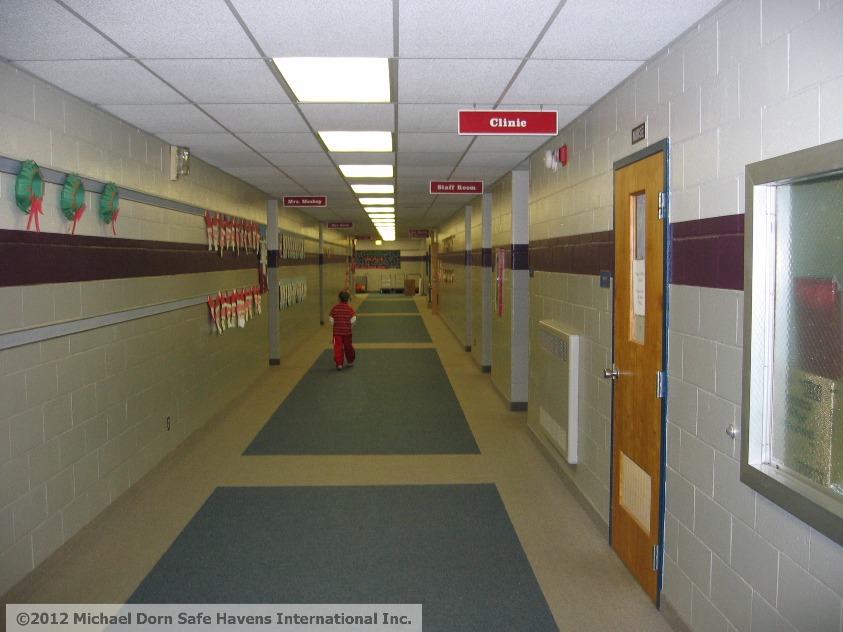
Easy, Inexpensive and Effective – Improve Student Supervision to Enhance School Safety


Student supervision is one of the best ways to improve school safety

Students who are not being supervised in schools are more at risk

One of the most important aspects of school safety involves student supervision.

Effective student supervision practices reduce the risk of school safety incidents ranging from bullying, non-custodial abductions of students, sexual assaults on campus, weapons incidents, tornadoes and even terrorism. This is because improvements in student supervision are a powerful preventive measure while also being an important emergency preparedness tool.

For example, it is harder for someone to physically bully a student who is being closely supervised and it is not as easy to move students who are not being carefully supervised to safety if a tornado warning is received. One of the most common issues in school safety litigation involves student supervision. School safety expert witnesses are frequently asked to evaluate how much of an impact student supervision has had in a school safety incident.

Taking the time to focus on and properly address student supervision issues is time well spent.

Protect Yourself so You can Protect Others – A Critical School Safety Concept

Anyone who has flown commercial air in the last decade or so has heard the safety message that they should put their own mask on before putting the oxygen mask on others such as small children in the event of a loss of cabin pressure. Though many people do not realize just how fast they can lose consciousness, they do understand that it is logical because they cannot properly protect children if they become unconscious while trying to help a child put their mask on first. There is an important school emergency preparedness point in this example from commercial aviation. School employees should be taught to take care of their own safety first so they can in turn be capable of protecting students and other staff. As at least two school employees have already died heroically but needlessly in school shooting situations because they did not apply this concept, it bears mention.

Law enforcement officers, fire service professionals and other public safety personnel are trained on this point heavily. Many deaths in these fields have provided practitioners in those fields with object lessons that should not be forgotten. An acquaintance of mine died in just this manner when he hit a utility pole while rushing to the aid of a fellow officer. His fatal crash not only took his life, but it also diverted valuable assistance to the officer in distress because additional units had to rush to his aid when he crashed.

Just as public safety officials must be trained to overcome the natural tendency of caring people to sometimes put the safety of others first inappropriately, educational employees should be trained to consider what help they will be able to provide if they become incapacitated because they do not take adequate steps to protect themselves before they act to protect others.

Carefully Define your Scope of Work for School Safety Assessment Projects

One thing I have noticed in reviewing bid solicitations for many school safety assessment projects over the years is that the requests for proposals (RFP’s) for these projects are almost always different from one another. One reason that almost no two RFP’s are alike is that each client has its own needs and focus. Another reason they vary so much is that there are so many different approaches to conducting assessments for schools.

Even the terminology for the assessments varies widely. For example, here are some of the more common descriptors used for these processes:

• School security assessment

• School security audit

• School safety assessment

• School safety audit

• School hazard and vulnerability assessment

• School risk assessment

• School hazard hunt

• School tactical site survey

• School safety, security, climate, culture and emergency preparedness assessment

• Student supervision assessment

• School emergency preparedness assessment

This list could easily run to a full page if we listed all of the terms we have seen in RFP’s. While there is no problem with the use of any of these terms, it is important to understand that these terms without a proper scope of work all mean different things. For example, an “audit” implies a different approach to and “assessment” and a school security assessment will be taken by many vendors to exclude general safety issues and does not cover issues relating to school climate, culture or emergency preparedness. Taking the time to determine what aspects relating to school safety need to be evaluated before writing an RFP can go a long way to a more effective and practical bid process.

For example, one attendee to a state – wide training program on school safety evaluation and assessment related that her district had paid a consultant an enormous sum of money to assess school in her district. Though the consultant presented himself as one of the nation’s top experts, he only spent about forty five minutes in each school and delivered very basic reports in contrast with the processes we were outlining in the training session. The district had tried to terminate the contract with the consultant due to numerous complaints that had been received by district staff and area public safety personnel but the consultant had threatened to litigate the district. The district ended up attending a training session on the coordination of school safety assessments and re-doing all of the assessments themselves. In hindsight, the district realized that a failure to properly define the scope of work had helped contribute to this unpleasant situation.

A little bit of research prior to releasing a bid solicitation can help to make sure that the services that are desired match those that are delivered, reduce the costs of the services and ensure that safety is enhanced by the process.