Do we have good “people detectors” in our schools?

As with every multiple victim school shooting in recent years, media coverage of Monday’s school shooting in Chardon, Ohio has been at times heavily focused on what warning signs might have been ignored or missed prior to the shooting. I caution people to be careful as they evaluate information on these situations from the media as we have already seen many instances of inaccurate information in this case as we have with past targeted acts of school violence.

In his excellent book Columbine author Dave Cullen’s extensive research into the actual occurrences clearly counters the many myths that arose out of that tragedy. His book refutes the still common claim that bullying played a major role in the event, that the shooters were “loners” and that the infamous “trenchcoat mafia” never existed. At the same time, each of these events does and should make us ask the probing questions relating to actions, words, social network communications, behaviors and other observable indicators that have often when detected, helped to avert tragedy.

The near miss at East High School in Green Bay, Wisconsin is a case in point. Alertness, connectivity between students and staff and superb collaboration between school and law enforcement officials prevented a great tragedy at that well run school where people are connected to other people to a high degree. To paraphrase how one United States Department of Education official put it – we need people detectors in our schools.

Working in a school district where we stopped multiple planned school shootings, one planned school bombing and a planned double suicide deeply ingrained the importance of school employees being structurally as well as personally connected to the students they have chosen to serve. Fortunately, school officials today have considerably better information than their counterparts did when the per capita school homicide rate was much higher in the 1970 to 1980 time period. This most recent tragedy serves as yet another reminder that terrible acts of school violence can occur in great schools in nice communities.
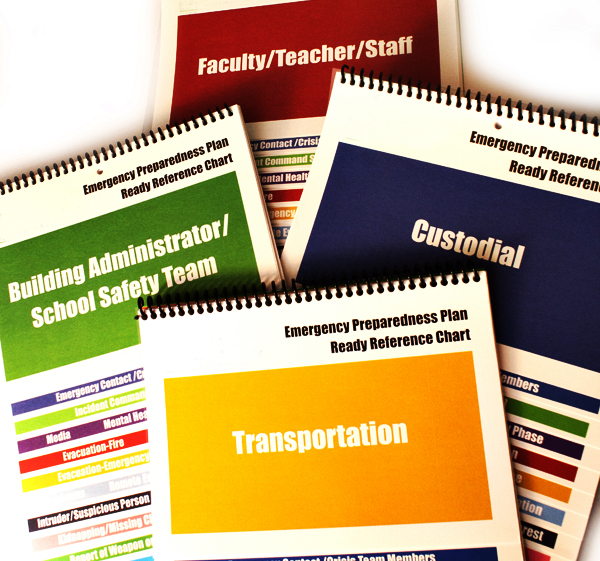
Role Specific School Crisis Planning can be a Life Saver


Role specific school crisis plans

Role specific school crisis plans can help staff perform more effective mental simulation to prepare for crisis events


Role specific school crisis plans can better prepare school staff to utilize mental simulation to prepare for emergencies

As the recent school shooting in Chardon, Ohio demonstrates, any and every employee in a school may be required to take immediate action to minimize injuries and prevent the loss of human life. Properly preparing employees to handle a wide variety of emergency situations through training, empowerment and practice. This requires that role relevant and specific information be provided because different employees do not do the same thing in a crisis event. For example, a building principal in an elementary school does not perform the same action steps as a custodian, who typically performs different action steps than a food service employee or a school bus driver. As another example, if all employees in a school operate off of the same emergency planning component and an action step is to call 911, all 75 employees in a school may be tied up for several minutes while they jam the 911 center with redundant calls.

There are several ways to address role specific school crisis planning. One of these approaches involves the creation of role specific emergency charts for key job classifications as has been done as a statewide planning concept in Wisconsin and Indiana. While this approach requires far more time in the plan development phase, it can reduce the amount of training time needed for a large number of employees. Emergency reference charts should not be viewed as an instructional manual to follow step by step during the first critical seconds of a crisis. Instead they are a valuable tool to help staff develop what Dr. Gary Klein refers to as a base of knowledge. Klein’s research shows that people can perform exceptionally well in making life and death decisions but they need practice using a concept known as mental simulation. For school employees to get increased benefit from this research – based concept, they need to be provided appropriate responses to a wide array of situations rather than just a few situations that we fear the most like active shooter situations.

Role specific planning is one way to help afford a variety of school employees with a good framework of experience so they can be more prepared to meet any crisis situation they encounter. American educators have been forced to address a wide range of crisis events such as the September 11 terrorist attacks which required immediate action by school officials, an antipersonnel grenade detonating in a rural Georgia high school band room, a teacher committing suicide in a homemade gas chamber he constructed and a number of other seemingly bizarre incidents that most schools would not plan for specifically. Role specific school crisis planning can be a valuable school safety tool.

New School Safety Training and Evaluation System Makes Every Second Count

New Learning and Evaluation System to enhance School Safety

Safe Havens has been scripting, filming and editing for more than a year to develop a powerful new emergency preparedness evaluation and staff development system designed to help improve the ability of school staff to make life and death decisions in the first 30 seconds of a crisis. This system is based on one-on-one evaluations with more than 500 school employees from around the nation and the research of a number of top experts. This system Safe Topics – The First 30 Seconds was released today. You can view a powerful 90-second demonstration video on the home page of our web site at http://www.safehavensinternational.org.